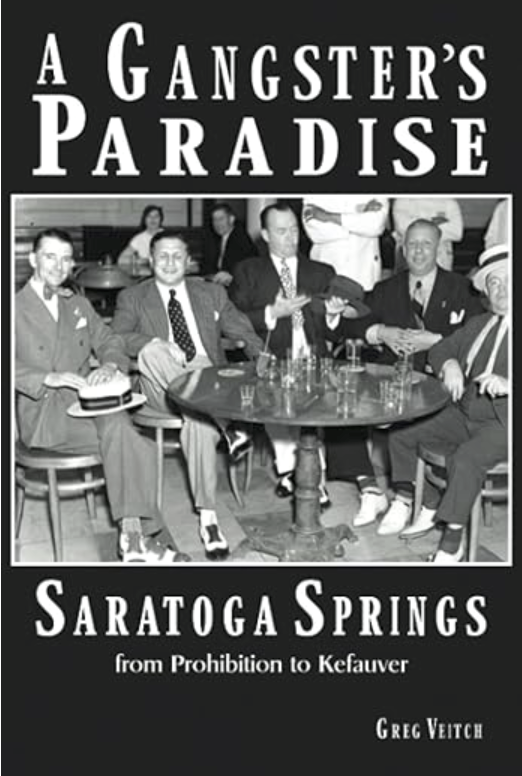
In the summer of 1926, Saratoga Springs stood at the height of its fame — and perhaps at the height of its contradictions.
The city was America’s most celebrated summer resort. Railroad magnates, Wall Street financiers, politicians, bookmakers, actresses, sportsmen, and socialites crowded Broadway beneath the elms. Luxury automobiles rolled past the great hotels. Airplanes carrying wealthy visitors occasionally descended nearby, symbols of a modern age arriving at full speed. The verandas of the Grand Union and United States Hotel glittered with jewelry, linen suits, cigars, cocktails, and gossip.
But beneath Saratoga’s elegant surface lay a parallel city — a wide open world of gambling rooms, political accommodations, protected vice, speakeasies, and quiet understandings between criminals and public officials.
By 1926, many residents had come to believe that the machinery of government itself had become entangled with Saratoga’s gambling economy. That summer, the city’s long-running balancing act between glamour and lawlessness began to collapse.
At the center of the growing storm stood a quiet but determined reformer named Peter A. Finley, a respected local attorney, businessman, and president of the Saratoga Taxpayers Association — a civic organization increasingly alarmed by the city’s deteriorating reputation and the apparent inability, or unwillingness, of officials to enforce the law impartially.
On July 23, 1926, Finley took the extraordinary step of writing directly to New York Governor Al Smith. His complaint was blunt, carefully documented, and explosive in its implications. Saratoga Springs, he argued, had fallen under the influence of organized gambling interests operating with political protection. Local authorities, he charged, could no longer be trusted to police themselves.
Finley’s open letter to the Governor triggered one of the most dramatic public investigations in Saratoga Springs history — a confrontation that exposed the hidden machinery beneath the city’s glittering façade. Nearly a century later, we return to that summer to understand how Saratoga arrived at its moment of reckoning, and what the struggle between power, vice, and civic conscience still reveals about the city today.